ACCESSIBILITY 2026
The first international conference on Accessibility
An international conference on accessibility, bringing together researchers, educators and practitioners to explore accessibility, inclusive design, education, practice and social impact.
About the Conference
ACCESSIBILITY 2026 brings together researchers, educators and practitioners to explore accessibility as a shared challenge across education, technology, design, policy and everyday life.
The conference is sponsored by AccessCoVE, the European Centre of Vocational Excellence in Accessibility, and supported by European Union funding. It aims to create a space for exchanging research, educational practices and design approaches that advance accessibility and inclusion across diverse contexts.
Contributions address accessibility from multiple perspectives, including inclusive design, assistive technologies, universal design, digital accessibility, accessible education, vocational education and training, independent living, public participation and the societal impact of accessibility.
Accessibility & Inclusive Design
Designing and evaluating systems, products, services and environments that are accessible, usable and desirable for people with disabilities and elderly individuals.
Technology for Accessibility
Exploring how technologies such as artificial intelligence, virtual reality, assistive technologies and digital tools can support accessibility and inclusion.
Education, Practice & Social Impact
Connecting research, teaching cases, professional practice and social impact in accessibility across Europe.
Online Participation
ACCESSIBILITY 2026 will be broadcast as a live Zoom webinar, open to all. No registration is required.
Zoom Webinar
The conference will be live streamed as a Zoom webinar. Each presenter has 20 minutes: 15 for presentation and 5 for questions.
Open Access
The webinar is open for at least the first 200 participants. No registration fee is required to attend.
Recordings
Presentations are planned to be recorded and made available after the conference where possible and subject to speaker consent.
Keynote Speakers
ACCESSIBILITY 2026 includes invited keynote presentations by leading researchers in accessibility, inclusive design, disability, ageing and technology.
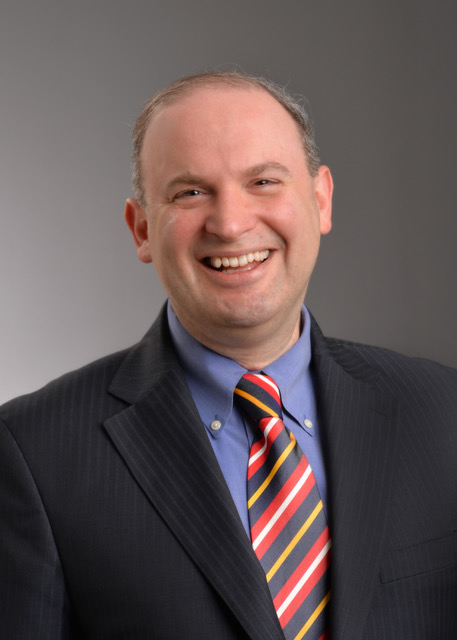
Professor, University of Maryland · Visiting Professor, University of Toronto & University of Cambridge
Abstract
Digital technologies, applications, websites, and documents are often created without considering accessibility for people with disabilities. Often, the inaccessible technologies or content are remediated for accessibility after development, remediated for accessibility only when there is a complaint from a person with a disability, or are never remediated for accessibility.
Remediating technologies after-the-fact is not a cost-effective approach, and the time delay between when digital technologies and content are built and released and when they are made accessible can itself be a form of societal discrimination.
For years, disability rights groups have demanded born-accessible design, and some government policies are starting to require it, yet the research literature in human-computer interaction and user experience does not yet define born-accessible design or any methods for it. This presentation will focus on describing our work on born-accessible design in two areas: tools and methods.
We have been collaborating with Adobe on developing software tools with interventions to support content creators in adding accessibility markup and attributes during their workflow, leading to the creation of born-accessible content which needs no remediation. And on a broader level, we have been working with disability rights groups, technology companies, and policymakers, to build a methodological framework for implementing born-accessible design.
Biosketch
Jonathan Lazar is a Professor in the College of Information at the University of Maryland, where he is the founding director of the Maryland Initiative for Digital Accessibility (MIDA) and is a faculty member in the Human-Computer Interaction Lab (HCIL). He is currently on sabbatical leave from UMD and is a visiting professor at the University of Toronto and a visiting fellow at the University of Cambridge.
He has previously authored or edited 19 books and published over 200 refereed articles in journals, conference proceedings, edited books, and magazines, related to human-computer interaction, user-centered design, accessibility, policy, and law. He has received research funding from the U.S. National Science Foundation, the U.S. National Institute on Disability Independent Living and Rehabilitation Research (NIDILRR), Google, and Adobe.
He is the recipient of the 2024 IAAP Accessibility Initiatives Award, the 2020 ACM SIGACCESS Award for Outstanding Contributions to Computing and Accessibility, and the 2016 ACM SIGCHI Social Impact Award, is a member of the ACM SIGCHI Academy, and served as the general chair of the 2021 ACM ASSETS conference.
Abstract
Ableism and ageism deeply influence our conversations, methods, and practices around technology development and deployment. Design for disability and design for older age are often oriented in ways that are at odds with the other and don't do justice to the contributions of disabled or older people. In this talk, we will unpack some of these biases and underlying assumptions about disability and old age that shape ideas about what people make, how to approach therapy, whose stories get told, and more.
We end by highlighting different approaches that attempt address technoableism and technoageism.
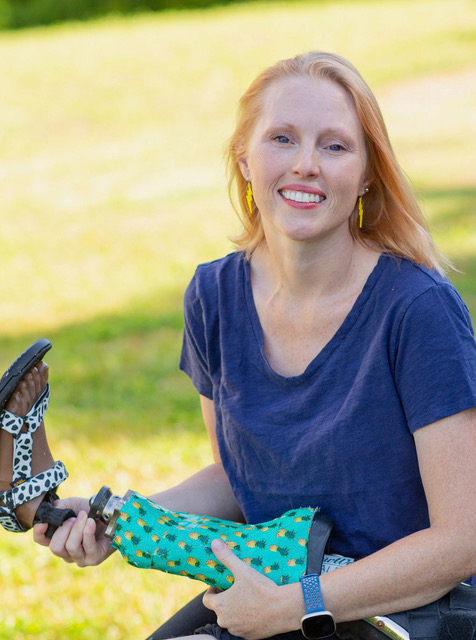
Associate Professor, Virginia Tech · Department of Science, Technology, and Society
Dr. Ashley Shew is a multiply disabled person: tinnitus-buzzing, hard-of-hearing, chemobrained amputee (all due to treatment for bone cancer) with Crohn's disease (unrelated to bone cancer). She is also a working philosopher of technology and biotech ethicist as a faculty member at Virginia Tech in the Department of Science, Technology, and Society. She has expertise on the subjects of animal studies, disability studies, ethics and emerging technologies, and technological knowledge.
She likes the challenge of writing and adapting material for different audiences and communities.

Assistant Professor, Presidential Frontier Faculty | University of Houston
Dr. Chorong Park is an Assistant Professor and Presidential Frontier Faculty at the University of Houston, working across Human-Computer Interaction, Human-Robot Interaction, UX, and age-friendly technology design. Her research connects aging, disability, health, and emerging technology, with emphasis on AI-powered agents, social robotics, AR/VR/XR, accessibility, and ethical design.
Drawing on sustained community-engaged research with older adults, including hundreds of hours of technology-support work in senior centers and living facilities, Park studies how design norms shape confidence, autonomy, privacy, trust, and joy in later life. Her work challenges technoageism and deficit-based models of aging by treating older adults as collaborators with emotional lives, access needs, and design insight.
Her publications span CHI, ASSETS, IEEE VIS, IEA, and accessible design venues, including work on cyborg assemblages, photosensitive social media safety, Kansei Engineering for older adults, privacy-aware companion robots, and AR-based Digital Postcards for memory and connection.
Programme
The programme for ACCESSIBILITY 2026 is available below. Each paper presentation is scheduled for 20 minutes: 15 minutes for presentation and 5 minutes for questions.
Welcome and introduction to ACCESSIBILITY 2026.
Papers, Proceedings and Recordings
Abstracts and selected full papers are available through the expandable paper cards in the programme. Further papers will be added once they are approved for publication.
Accessible PDFs
Published materials will be prepared with accessibility in mind, including clear structure, headings and tagged PDF formatting where possible.
Peer Review
Submissions are reviewed by an International Program Committee and evaluated for originality, significance, clarity, novelty and relevance.
Open Access
Proceedings and accepted materials will be linked from this page when approved for release.
Call for Contributions
We invite high-quality, original papers, experience reports, teaching cases and presentations that advance the field of accessibility, with a focus on improving the lives of individuals with disabilities and elderly people.
Submissions may present novel designs, systems, tools, methodologies, educational practices or social impact. In line with the principle 'nothing about us without us', authors are encouraged to involve representative users in their research whenever possible, including through co-design, participatory design and value-sensitive design.
Research Papers
Full papers, short papers and literature reviews presenting accessibility research, methods, systems, evaluations or theoretical contributions.
Innovation Cases
Experience reports and teaching cases sharing practical experiences, lessons learned and examples from accessibility education, training or practice.
Ignite Sessions
Short and engaging presentations showcasing innovative ideas, prototypes, early-stage work or projects in accessibility.
Topics and Themes
We welcome contributions across accessibility research and practice. Topics may include, but are not limited to:
Accessible Design and Evaluation
Accessible design, usability evaluation, accessibility testing, standards, guidelines, web and app accessibility, inclusive communication design.
Technology for Accessibility
Assistive technology, AI and machine learning for accessibility, VR and AR, Internet of Things, wearable technology, haptic and multimodal environments.
Education and Digital Learning
Accessibility education, accessible educational materials, e-learning, digital education, higher education, vocational education and training.
Independent Living and Society
Accessible healthcare, smart homes, smart cities, active ageing, independent living, inclusive employment, policy, advocacy and societal impact.
Culture, Participation and Public Life
Accessibility in arts and culture, media, sports, tourism, crisis response, transportation and global perspectives on accessibility.
Important Dates
| Category | Date |
|---|---|
| Long Papers | April 1, 2026 |
| Literature Reviews | April 1, 2026 |
| Short Papers | May 30, 2026 |
| Experience Reports / Teaching Cases | May 30, 2026 |
| Ignite Sessions | May 30, 2026 |
| Conference Dates | June 29–30, 2026 |
The conference will take place in a digital format on June 29–30, 2026.
EasyChair remains available for authors with pending submissions or final paper uploads.
Contact
Accessibility Enquiries
For accessibility-related questions or to report an accessibility barrier, please contact:
Jan Gulliksen
Project Website
For general project information, visit accesscove.org.
Main Sponsors
ACCESSIBILITY 2026 is sponsored by AccessCoVE, the European Centre of Vocational Excellence in Accessibility, and supported by European Union funding.
AccessCoVE
The European Centre of Vocational Excellence in Accessibility. accesscove.org
European Union
Co-funded by the European Union under the Erasmus+ programme.
Accessibility Statement
This accessibility statement applies to the ACCESSIBILITY 2026 conference website. The AccessCoVE project is committed to ensuring digital accessibility for people with disabilities and aims to continuously improve the user experience for all visitors.
Conformance Status
We aim for this website to follow Web Content Accessibility Guidelines (WCAG) 2.2, Level AA principles, in line with the accessibility expectations of the EU Web Accessibility Directive (Directive (EU) 2016/2102). The website is partially conformant, meaning some content may not yet fully meet all guidelines.
What We Have Done
- Clear and consistent heading structure throughout the page
- Readable font sizes and high-contrast text
- Keyboard navigation support, including a skip-to-content link
- Descriptive labels and ARIA attributes on interactive elements
- Alternative text on meaningful images and decorative icons marked as hidden
- No content that flashes more than three times per second
- Language of the page declared in code (
lang="en")
Known Limitations
The following known limitations exist at the time of publication:
- Selected papers are now available for download. Further papers will be added as they are approved for publication. Proceedings and recordings are not yet available.
- The Zoom webinar link has been published. Some accessibility aspects of the Zoom webinar platform remain outside our direct control.
- The EasyChair submission platform is an external service and has its own accessibility statement.
Feedback and Contact
If you encounter an accessibility barrier on this website, or if you require information in an alternative format, please contact Jan Gulliksen, General Chair, at gulliksen@kth.se. We aim to respond to accessibility requests within 14 days.
Enforcement
If you are not satisfied with our response, you have the right to contact the relevant national enforcement body in your country. This website is published in the context of an EU-funded project and we are committed to addressing accessibility issues in good faith.